
You’re running on broken sleep, holding a baby at 3am, and somehow expected to perform at full capacity in the office by 9am. For many new fathers, this is the reality. Taking a mental health day off work in the UK is not a luxury or a sign of weakness. It is a legitimate, legally supported way to protect your well-being and, by extension, your ability to show up as the father and partner your family needs. This guide walks you through exactly how to do it, from understanding your rights to planning a confident return to work.
Table of Contents
Key Takeaways
PointDetailsMental health days support new dadsTaking mental health days helps new fathers manage stress and balance parenting with work responsibilities.New SSP rules improve accessSince April 2026, statutory sick pay is available from day one and to more employees, reducing financial worries when taking time off.Fit notes aid return to workA mental health fit note not only verifies absence but also suggests workplace adjustments to facilitate recovery.Clear communication mattersBeing open with your employer about support needs—without oversharing—helps ease return and reduces stigma.Phased returns ease transitionGradual returns with flexible hours and workload adjustments make coming back to work after a mental health day more manageable.
Understanding why mental health days matter for new dads
New fatherhood is one of the most significant life changes a man can experience. The joy is real, but so is the exhaustion, the identity shift, and the pressure to keep earning while everything else in your life has been turned upside down. These pressures are not trivial. They accumulate quietly, and many dads do not recognise them as mental health concerns until they are already struggling.
The scale of the problem in UK workplaces is significant. 32% of employers cited stress, anxiety, depression, or other mental health problems as a cause of sickness absence, according to Acas data. That means mental health is already one of the leading drivers of time off work across the country. For new dads, the risk is compounded by sleep deprivation, relationship strain, financial pressure, and the cultural expectation to simply get on with it.
Here are some of the specific pressures new fathers commonly face:
“Fathers are more likely to experience mental health difficulties in the first year of their child’s life than at any other point. Yet they are far less likely to seek help.”
Acknowledging that you need a break is not failure. It is self-awareness. And learning to cope with parental stress early is one of the most effective things you can do for your child’s development as well as your own.
Preparing to take a mental health day off work in the UK
Before you call in, it helps to understand the process. Taking a mental health day off work in the UK follows the same procedure as any other sickness absence. Knowing the rules removes the anxiety from the decision.
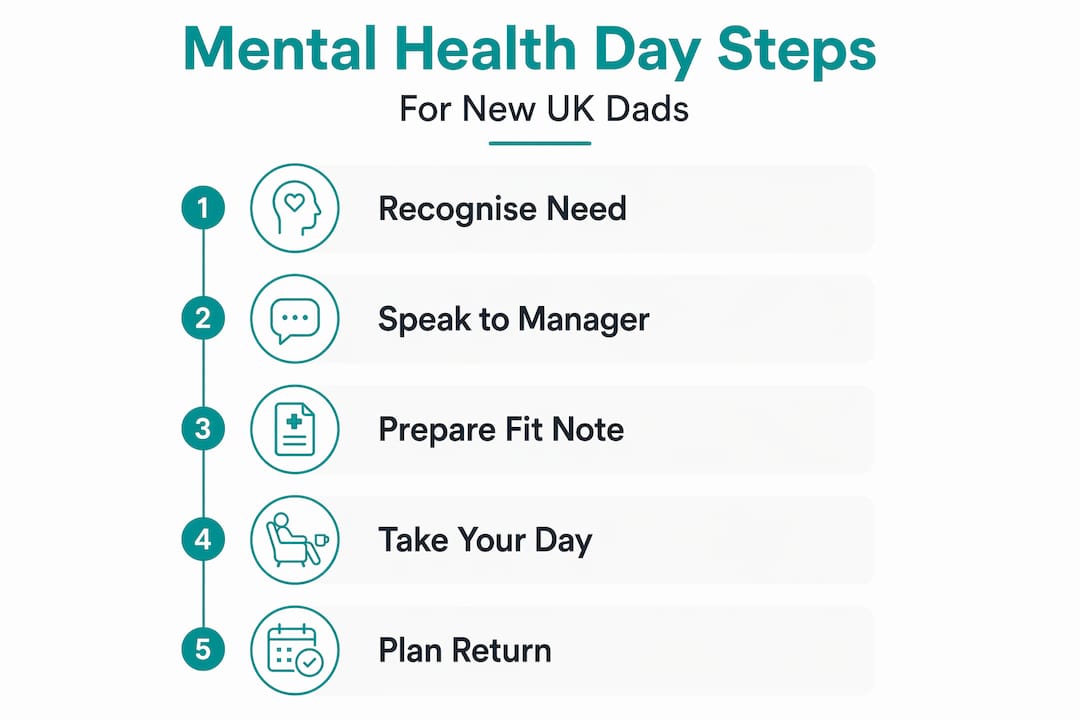
Here is a step-by-step breakdown:
SSP and fit note at a glance
SituationWhat you needSick pay availableAbsence of 1 to 7 daysSelf-certification onlyYes, from day one (from April 2026)Absence over 7 daysFit note from GPYes, from day one (from April 2026)Requesting workplace adjustmentsFit note recommendedDepends on employer policyLong-term mental health leaveFit note requiredSSP up to 28 weeks
A mental health fit note can do more than confirm your absence. It can also recommend specific workplace adjustments, such as a phased return or reduced hours, which your employer is legally required to consider.
Pro Tip: Before you speak to your GP, use a mental health check-in to identify what you are actually experiencing. Having clear language for your symptoms makes the GP conversation much more productive.
How to talk to your employer and take your mental health day off
This is often the part new dads dread most. Telling your employer you are not coming in because of your mental health can feel exposing. But you have more control over this conversation than you might think.
Follow these principles when communicating your absence:
“You are not obliged to disclose a mental health diagnosis to your employer. You are only required to report that you are unwell and unable to work.”
Stigma around mental health in the workplace is real, but it is shifting. If you are worried about how your absence will be perceived, it may help to read more about breaking the stigma of parental depression before you have that conversation. Being prepared makes a real difference.
Pro Tip: If you are concerned about how your manager might respond, consider speaking to HR directly, or contacting your Employee Assistance Programme (EAP) if your employer offers one. EAPs provide confidential mental health support and can also advise you on your rights.
Planning your return to work after a mental health day
Whether you have taken one day or several weeks, planning your return thoughtfully makes a significant difference to how sustainable it feels. A poorly managed return can undo the recovery you have made.
Here is how to approach it:
Phased return vs immediate full return
ApproachBenefitsPotential drawbacksPhased returnGradual reintegration, lower stress, sustainableMay feel slower; requires employer agreementImmediate full returnQuicker sense of normalityHigher risk of relapse; can feel overwhelmingWorking from home initiallyReduces commute pressure; more control over environmentMay feel isolating if not managed carefully
Common reasonable adjustments that employers can offer include flexible working hours, temporary workload reduction, regular one-to-ones with a manager, and the option to work from home. Under the Equality Act 2010, employers must consider reasonable adjustments for eligible employees. A fit note that recommends specific adjustments gives you a formal basis for that conversation.
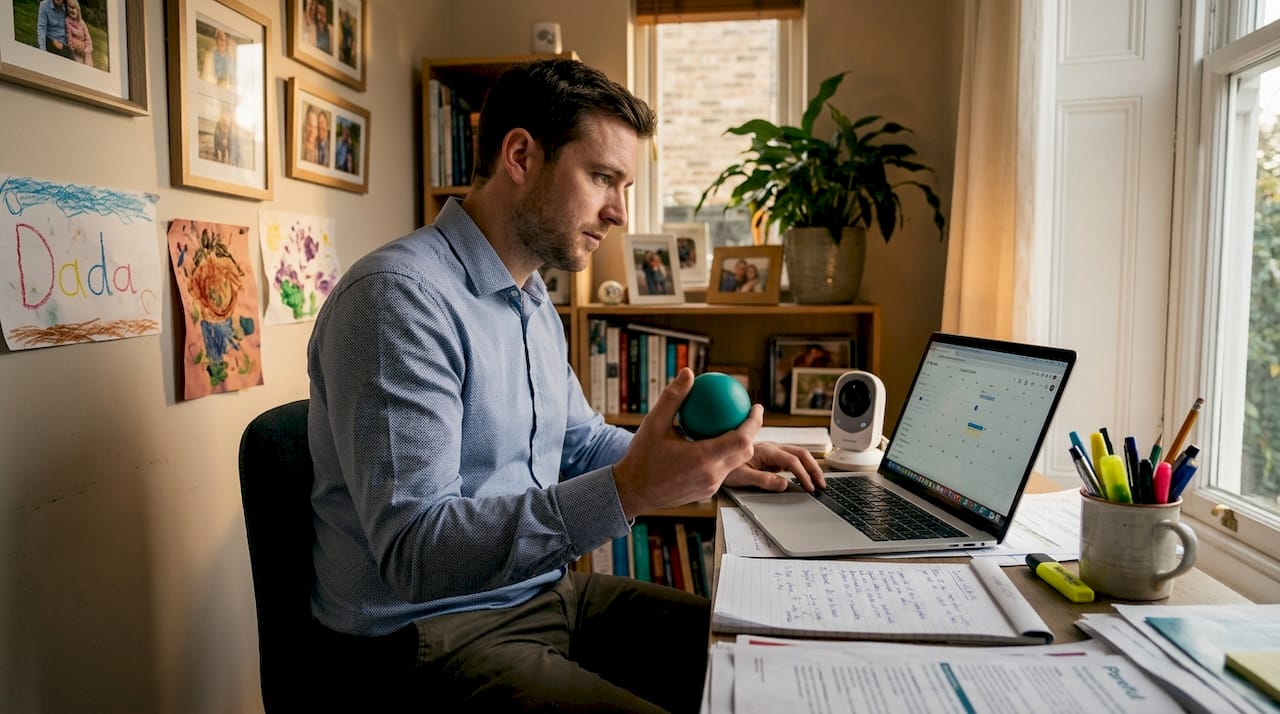
Phased returns with flexible hours and workload adjustments are among the most effective tools for easing the transition back. Do not underestimate how much a small change, like starting at 9:30 instead of 9:00, can reduce daily pressure.
For broader guidance on supporting your wellbeing through this period, the resources on supporting parents with mental health are worth exploring.
What to expect after taking a mental health day off work
Recovery from mental health difficulties is rarely a straight line. You may return to work feeling refreshed, or you may find that the underlying pressures are still there. Both experiences are normal.
Here is what many new dads report after taking time off for mental health:
As mental health absence research confirms, returning to work after mental health absence can be challenging and feelings of doubt and anxiety are normal. Knowing this in advance removes some of the sting.
Check in with yourself regularly after your return. If things feel unmanageable again within a few weeks, that is important information. Have a plan for what to do next, whether that is a GP appointment, a conversation with HR, or accessing support through an EAP or a mental health app. Creating space for mental health conversations at home with your partner can also help you process what you are experiencing rather than carrying it alone.
Why recognising and planning for mental health days is a game changer for new dads
Here is something most workplace wellness content does not say directly: a mental health day is not just rest. It is information. When you reach the point where you genuinely cannot function at work, your mind and body are telling you something important about your current situation. The question is whether you listen to it or push through until the situation becomes a crisis.
New dads are particularly vulnerable to the “push through” trap. There is cultural pressure to be the provider, to not complain, to save the vulnerability for your partner. But paternal mental health has a direct impact on your child’s development and your family’s stability. This is not abstract. It is evidence-based.
The strategic use of a fit note is one of the most underused tools available to you. Rather than framing your absence as a weakness, a mental health fit note can shift the conversation from “absence” to “support”, reducing stigma and opening the door to adjustments that make your work life genuinely more manageable. That is not gaming the system. That is using the system as it was designed to be used.
We also think new dads need to reframe what a mental health day actually achieves. It is not a cure. It is a reset. Used well, with a clear plan for the day and a structured return, it becomes part of a longer-term approach to coping with parental stress rather than a one-off reaction to crisis. That shift in thinking, from reactive to proactive, is what separates dads who manage well from those who keep hitting the same wall.
How Pareful supports dads taking mental health days off work
Knowing you need support and knowing where to find it are two different things. Pareful is a mental health app built specifically for fathers, offering tools, resources, and guidance designed around the real pressures of modern fatherhood.

Whether you are preparing to take your first mental health day, navigating a longer absence, or trying to build more sustainable habits around work and parenting, Pareful can help. The app provides structured check-ins, expert-backed content, and a community of dads who understand what you are going through. You do not have to figure this out alone. Visit Pareful to explore the support available and take the first step towards a more balanced approach to your mental health and your role as a father.
Frequently asked questions
Can I take a mental health day off work without a fit note?
Yes. For absences of seven calendar days or fewer, most UK employers allow self-certification. However, if your difficulties continue, a fit note from your doctor may be needed to formally support the absence and arrange any workplace adjustments.
What changes have been made to statutory sick pay in 2026?
From 6 April 2026, SSP is payable from the first full day of sickness absence and is available to all eligible employees regardless of their earnings level, making mental health leave more financially accessible than before.
How can I request adjustments when returning to work after a mental health day?
Speak to your manager or HR about what would help, such as flexible hours or a reduced workload. A fit note can formally recommend these adjustments, and under the Equality Act 2010 your employer must give them reasonable consideration.
What if I feel anxious returning to work after a mental health day?
Anxiety on returning to work is very common and does not mean the time off failed. Requesting a phased return, having a clear plan for your first week back, and accessing ongoing support through your GP or a mental health app can all make the transition more manageable.
Recommended
Related articles
Explore our wide range of expert-led articles, guides and tips on parental mental wellbeing.